

SINOSO | Sino Soviet Technology Co., Ltd. and China Agricultural University School of Science School Enterprise Cooperation Exchange Symposium Successfully Held
Release Date:2024-07-15 Source: Number of views:7
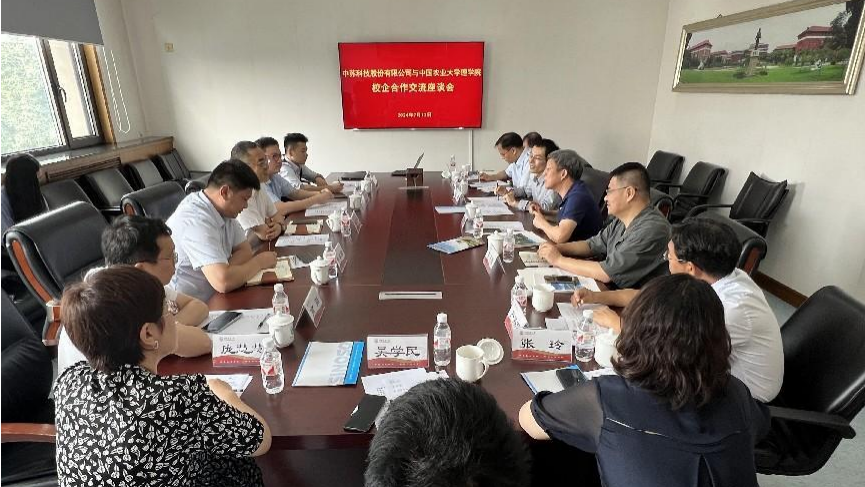
On July 12th, Zhongsu Technology Co., Ltd. (stock code: 872102) joined hands with the School of Science at China Agricultural University to successfully hold a unique school enterprise cooperation and exchange symposium. Senior leaders, experts, and scholars from both sides gathered together to explore a new chapter in the integration of scientific and technological innovation with industry, education, and research, and to contribute to the modernization of agriculture in China.
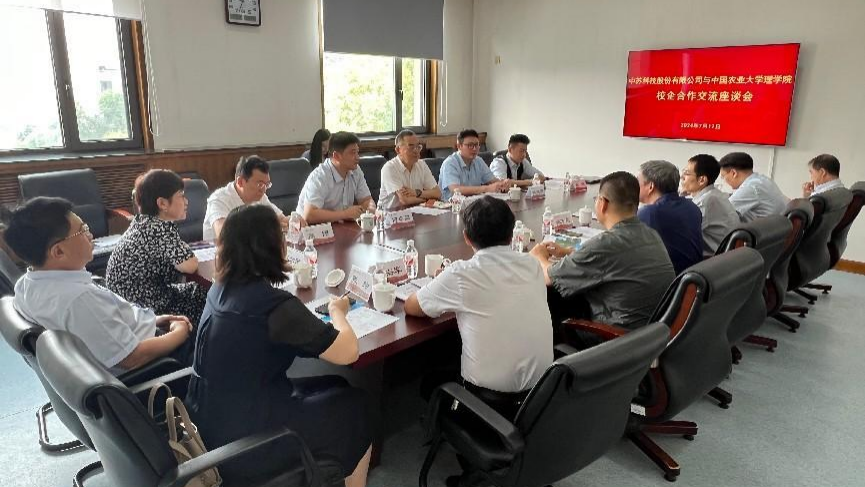
Lin Wanlong, Vice President of China Agricultural University, Li Hongdong, Secretary of the Party Committee of the School of Science, Wang Peng, Dean of the School of Science, Hou Songbo, Vice Dean of the School of Science, Zhang Ling, Deputy Secretary of the Party Committee and Vice Dean of the School of Science, Yan Haijun, Professor of the School of Water Resources and Civil Engineering, Liu Shangzhong, Director of the Department of Applied Chemistry of the School of Science, Pang Huihui, Director of the Department of Applied Mathematics of the School of Science, Gao Yang, Deputy Director of the Department of Applied Mechanics of the School of Science, Wu Xuemin, Professor of the Department of Applied Chemistry of the School of Science, Song Chengfa, Chairman of Zhongsu Technology Co., Ltd., Zhu Bin, Director of Market Expansion of the Market and Investment Development Center, Sun Siyang, Minister of Brand Department, He Zhuoyang, Marketing.
The meeting was chaired by Wang Peng, Dean of the School of Science, who provided a detailed introduction to the historical evolution, scientific research achievements, and future development direction of China Agricultural University, and advocated for both parties to explore more diversified forms of cooperation.
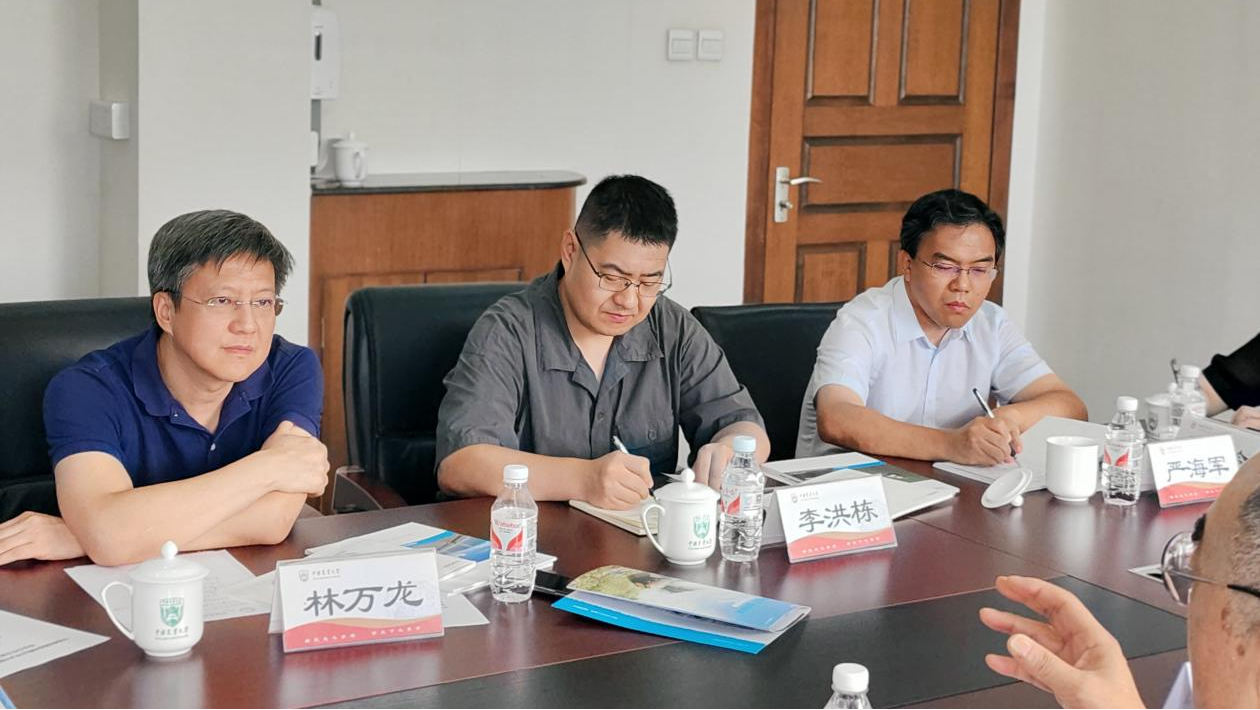
Lin Wanlong, Vice President of China Agricultural University, delivered a speech on behalf of the university, expressing high appreciation for the deep cultivation and meticulous work of Sino Soviet technology in the agricultural field, and placing high hopes on the cooperation between the two sides. He pointed out that the cooperation model of "Sino Soviet technology issues, China Agricultural University issues" can not only promote the rapid transformation of scientific research achievements, but also inject new vitality and momentum into the agricultural industry. And further expressed their expectations for cooperation, hoping that both sides can achieve deep integration in talent cultivation, scientific research projects, platform construction, and jointly promote the process of agricultural modernization. Li Hongdong, Secretary of the Party Committee of the School of Science, proposed the idea of establishing a cooperative research and development center, aiming to provide more efficient and professional services and support for the industry through resource integration and complementary advantages.
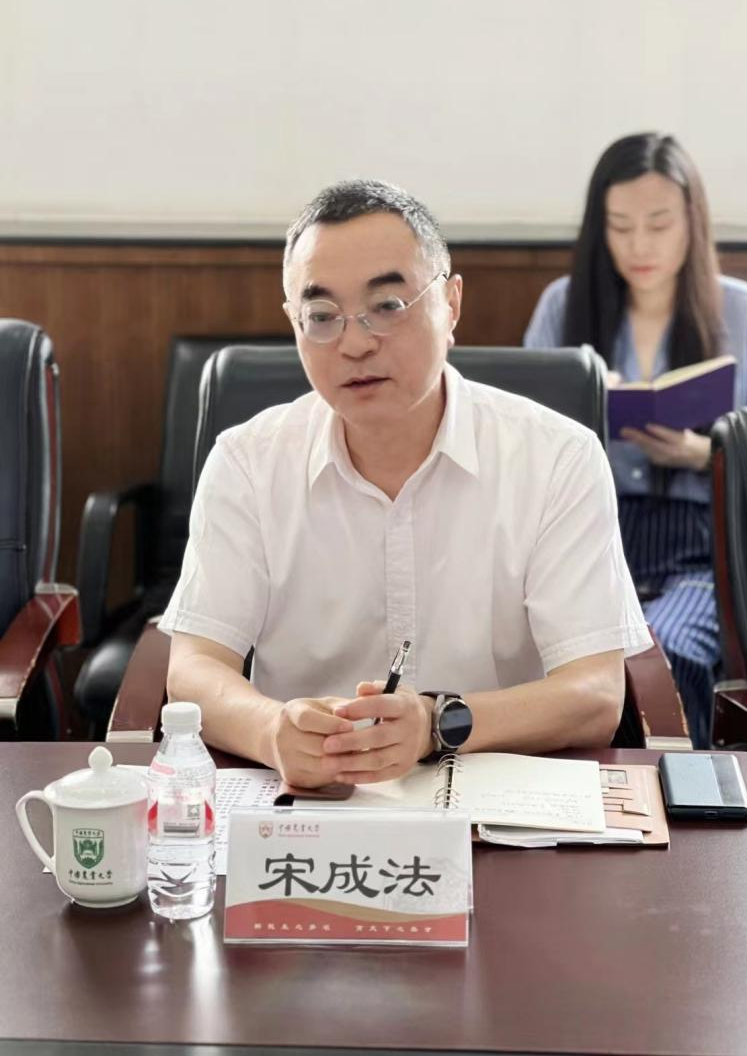
Lin Wanlong, Vice President of China Agricultural University, delivered a speech on behalf of the university, expressing high appreciation for the deep cultivation and meticulous work of Sino Soviet technology in the agricultural field, and placing high hopes on the cooperation between the two sides. He pointed out that the cooperation model of "Sino Soviet technology issues, China Agricultural University issues" can not only promote the rapid transformation of scientific research achievements, but also inject new vitality and momentum into the agricultural industry. And further expressed their expectations for cooperation, hoping that both sides can achieve deep integration in talent cultivation, scientific research projects, platform construction, and jointly promote the process of agricultural modernization. Li Hongdong, Secretary of the Party Committee of the School of Science, proposed the idea of establishing a cooperative research and development center, aiming to provide more efficient and professional services and support for the industry through resource integration and complementary advantages.
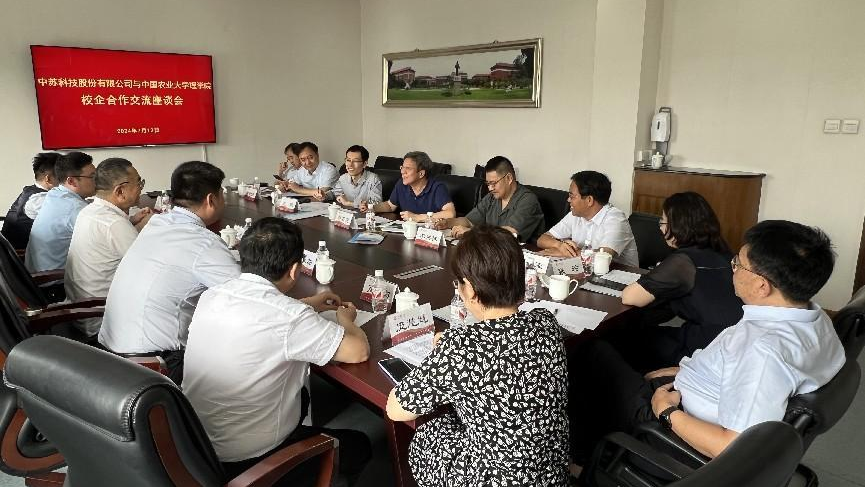
At the symposium, experts and scholars from the School of Science at China Agricultural University gave speeches and shared their latest research results and insights in their respective fields. Liu Shangzhong, the head of the Department of Applied Chemistry, elaborated on the broad prospects of new pesticide research and development, focusing on pesticides and product crop protection, and the practical application of Sino Soviet technology orchard robots in the future. Professor Wu Xuemin from the Department of Applied Chemistry proposed the concept of smart orchard product application, facility agriculture application, and the "three integrations" of agricultural machinery, agricultural equipment, and agronomy. Pang Huihui, the head of the Department of Applied Mathematics, delved into the application of agricultural big data and AI algorithms in precision agriculture, demonstrating the infinite possibilities of technology empowering agriculture. And Gao Yang, deputy director of the Department of Applied Mechanics, shared practical application cases of technological innovation in agricultural production from the perspective of monitoring plant growth and plant protection through IoT sensors.
Wang Peng, Dean of Right First College of Science
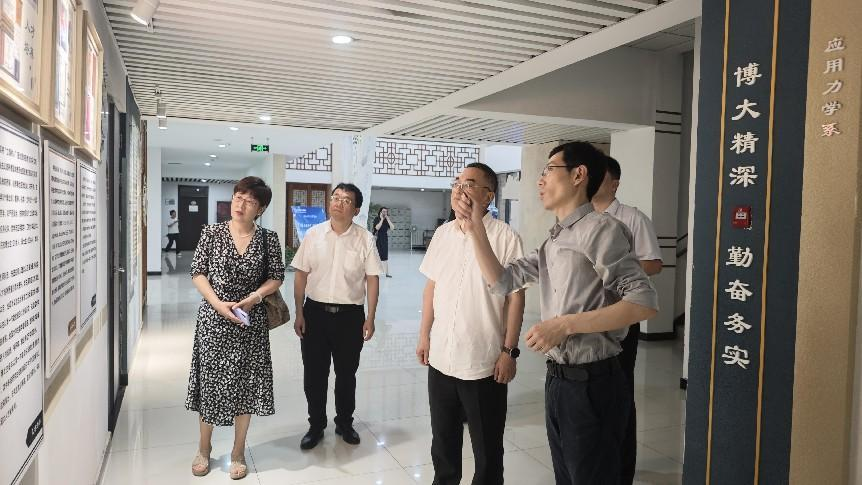
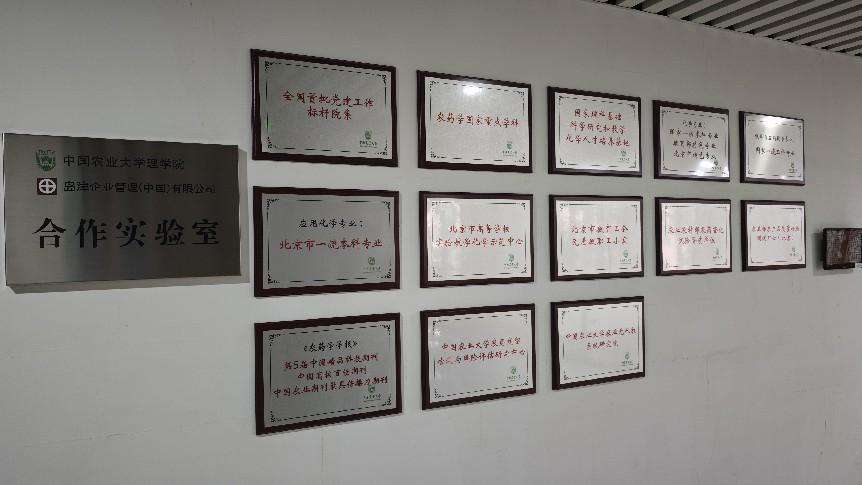
After the symposium, both sides also visited the School of Science at China Agricultural University for on-site visits, gaining a deeper understanding of the latest developments in agricultural science research at the university. The School of Science at China Agricultural University was formed by the merger of the School of Applied Chemistry, the Department of Engineering Basic Sciences, and the School of Information Science. It has four departments: Applied Science, Applied Mathematics, Applied Physics, and Applied Mechanics. The college has a national key discipline in agriculture and pharmacy, a national science basic scientific research and teaching talent training base for chemical majors (National Chemistry Science Base), a key open laboratory for pesticide chemistry and use technology of the Ministry of Agriculture, a Beijing Experimental Teaching Demonstration Center (Chemistry), and a Ministry of Agriculture Agricultural Product Quality Inspection and Testing Center (Beijing). The Department of Chemistry and the Chemistry major at Peking University are national chemical science bases, with key laboratories under the Ministry of Agriculture. Among them, Pesticide Science has pioneered pesticide science in China, and Agricultural Pharmacy is a national key discipline.
The school enterprise cooperation and exchange symposium between China Su Technology Co., Ltd. and the School of Science at China Agricultural University not only deepened the understanding and trust between the two sides, but also laid a solid foundation for future cooperation. I believe that with the joint efforts of both sides, a new chapter in agricultural technology cooperation can be created, contributing more wisdom and strength to China's agricultural modernization cause.
On July 12th, Zhongsu Technology Co., Ltd. (stock code: 872102) joined hands with the School of Science at China Agricultural University to successfully hold a unique school enterprise cooperation and exchange symposium. Senior leaders, experts, and scholars from both sides gathered together to explore a new chapter in the integration of scientific and technological innovation with industry, education, and research, and to contribute to the modernization of agriculture in China.
Lin Wanlong, Vice President of China Agricultural University, Li Hongdong, Secretary of the Party Committee of the School of Science, Wang Peng, Dean of the School of Science, Hou Songbo, Vice Dean of the School of Science, Zhang Ling, Deputy Secretary of the Party Committee and Vice Dean of the School of Science, Yan Haijun, Professor of the School of Water Resources and Civil Engineering, Liu Shangzhong, Director of the Department of Applied Chemistry of the School of Science, Pang Huihui, Director of the Department of Applied Mathematics of the School of Science, Gao Yang, Deputy Director of the Department of Applied Mechanics of the School of Science, Wu Xuemin, Professor of the Department of Applied Chemistry of the School of Science, Song Chengfa, Chairman of Zhongsu Technology Co., Ltd., Zhu Bin, Director of Market Expansion of the Market and Investment Development Center, Sun Siyang, Minister of Brand Department, He Zhuoyang, Marketing.
The meeting was chaired by Wang Peng, Dean of the School of Science, who provided a detailed introduction to the historical evolution, scientific research achievements, and future development direction of China Agricultural University, and advocated for both parties to explore more diversified forms of cooperation.
Lin Wanlong, Vice President of China Agricultural University, delivered a speech on behalf of the university, expressing high appreciation for the deep cultivation and meticulous work of Sino Soviet technology in the agricultural field, and placing high hopes on the cooperation between the two sides. He pointed out that the cooperation model of "Sino Soviet technology issues, China Agricultural University issues" can not only promote the rapid transformation of scientific research achievements, but also inject new vitality and momentum into the agricultural industry. And further expressed their expectations for cooperation, hoping that both sides can achieve deep integration in talent cultivation, scientific research projects, platform construction, and jointly promote the process of agricultural modernization. Li Hongdong, Secretary of the Party Committee of the School of Science, proposed the idea of establishing a cooperative research and development center, aiming to provide more efficient and professional services and support for the industry through resource integration and complementary advantages.
Lin Wanlong, Vice President of China Agricultural University, delivered a speech on behalf of the university, expressing high appreciation for the deep cultivation and meticulous work of Sino Soviet technology in the agricultural field, and placing high hopes on the cooperation between the two sides. He pointed out that the cooperation model of "Sino Soviet technology issues, China Agricultural University issues" can not only promote the rapid transformation of scientific research achievements, but also inject new vitality and momentum into the agricultural industry. And further expressed their expectations for cooperation, hoping that both sides can achieve deep integration in talent cultivation, scientific research projects, platform construction, and jointly promote the process of agricultural modernization. Li Hongdong, Secretary of the Party Committee of the School of Science, proposed the idea of establishing a cooperative research and development center, aiming to provide more efficient and professional services and support for the industry through resource integration and complementary advantages.
At the symposium, experts and scholars from the School of Science at China Agricultural University gave speeches and shared their latest research results and insights in their respective fields. Liu Shangzhong, the head of the Department of Applied Chemistry, elaborated on the broad prospects of new pesticide research and development, focusing on pesticides and product crop protection, and the practical application of Sino Soviet technology orchard robots in the future. Professor Wu Xuemin from the Department of Applied Chemistry proposed the concept of smart orchard product application, facility agriculture application, and the "three integrations" of agricultural machinery, agricultural equipment, and agronomy. Pang Huihui, the head of the Department of Applied Mathematics, delved into the application of agricultural big data and AI algorithms in precision agriculture, demonstrating the infinite possibilities of technology empowering agriculture. And Gao Yang, deputy director of the Department of Applied Mechanics, shared practical application cases of technological innovation in agricultural production from the perspective of monitoring plant growth and plant protection through IoT sensors.
Wang Peng, Dean of Right First College of Science
After the symposium, both sides also visited the School of Science at China Agricultural University for on-site visits, gaining a deeper understanding of the latest developments in agricultural science research at the university. The School of Science at China Agricultural University was formed by the merger of the School of Applied Chemistry, the Department of Engineering Basic Sciences, and the School of Information Science. It has four departments: Applied Science, Applied Mathematics, Applied Physics, and Applied Mechanics. The college has a national key discipline in agriculture and pharmacy, a national science basic scientific research and teaching talent training base for chemical majors (National Chemistry Science Base), a key open laboratory for pesticide chemistry and use technology of the Ministry of Agriculture, a Beijing Experimental Teaching Demonstration Center (Chemistry), and a Ministry of Agriculture Agricultural Product Quality Inspection and Testing Center (Beijing). The Department of Chemistry and the Chemistry major at Peking University are national chemical science bases, with key laboratories under the Ministry of Agriculture. Among them, Pesticide Science has pioneered pesticide science in China, and Agricultural Pharmacy is a national key discipline.
The school enterprise cooperation and exchange symposium between China Su Technology Co., Ltd. and the School of Science at China Agricultural University not only deepened the understanding and trust between the two sides, but also laid a solid foundation for future cooperation. I believe that with the joint efforts of both sides, a new chapter in agricultural technology cooperation can be created, contributing more wisdom and strength to China's agricultural modernization cause.
- Prev:SINOSO | Sino Soviet Technology: Gazelle Enterprise, Leading the Trend of Smart Agriculture Technology Innovation
- Next:SINOSO | SINOSO Technology makes a stunning appearance at the 10th Beijing International Digital Agriculture and Irrigation Technology Expo, with multiple innovative products leading the new trend of smart irrigation